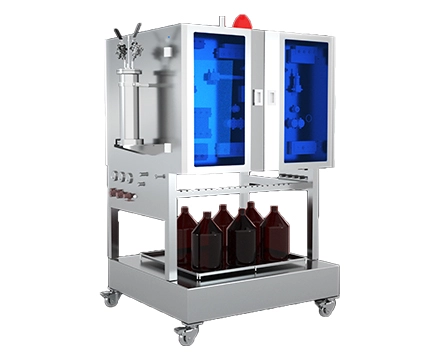
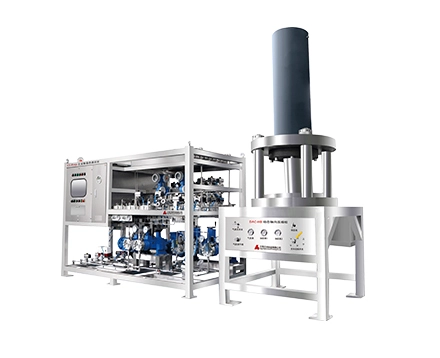
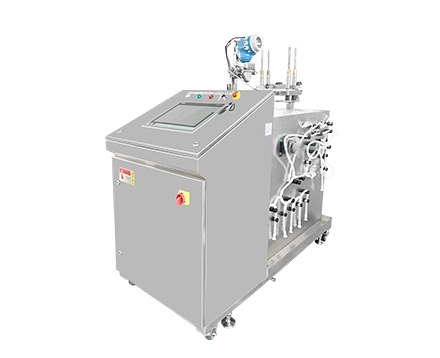
In the purification workflow of peptide drug manufacturing, salt‑switching (desalting and buffer exchange) directly determines final‑product quality, storage stability and clinical efficacy. Conventional dialysis involves cumbersome operations and poor scalability for industrial production. By contrast, ultrafiltration‑diafiltration (UF‑DF) features mild operating conditions, high processing efficiency and linear scale‑up capability. It has become the mainstream process for buffer exchange in industrial‑scale peptide production. Combining industrial practices, this paper elaborates the fundamental principles of UF‑DF for peptide salt‑switching, key points for process optimization, practical production challenges and corresponding countermeasures, for reference by technical practitioners in the industry.
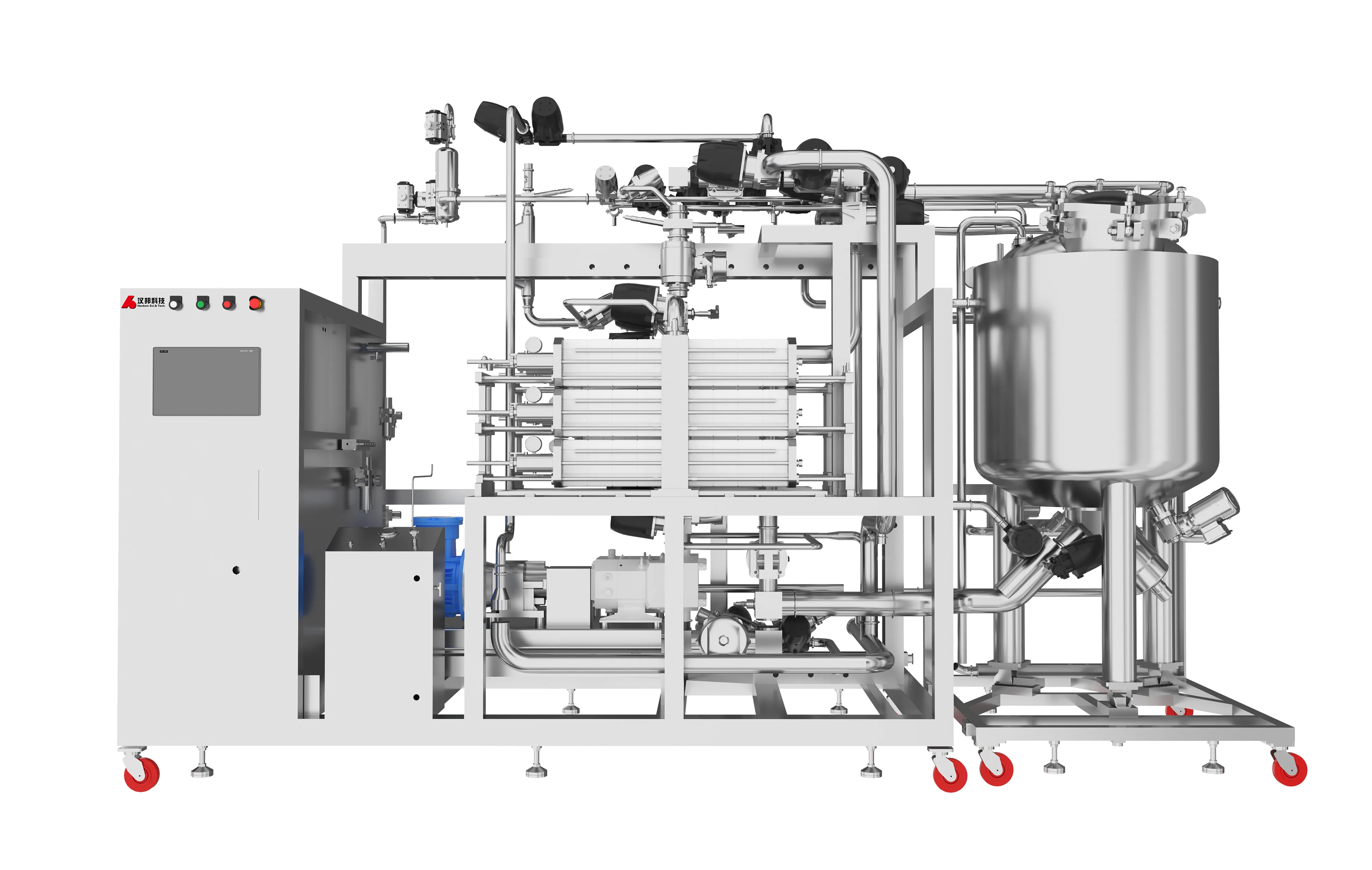
(Figure 1: Typical industrial‑grade ultrafiltration system)
I. Fundamental Principles of Ultrafiltration‑Diafiltration
Ultrafiltration is a tangential flow filtration (TFF) technology that achieves material separation via molecular size sieving. For peptide salt‑switching, diafiltration (DF) performs the actual buffer exchange. Two operating modes are available:
Discontinuous diafiltration (concentration‑dilution cycle)The sample is first concentrated, followed by dilution with replacement buffer and re‑concentration. Multiple cycles are performed to gradually displace original salt ions. This method is simple to operate yet causes drastic fluctuations in system pH and ionic strength, which may trigger peptide aggregation. It is more suitable for lab‑scale trials and not recommended for large‑scale manufacturing.
Continuous constant‑volume diafiltrationTarget replacement buffer is continuously fed into the feed tank, while the permeate discharge rate is controlled to match the buffer feeding rate to maintain a constant total system volume. It delivers gentle buffer‑environment variation and superior exchange efficiency, and serves as the preferred mode for industrial peptide salt‑switching.
II. Cross‑Process Comparison for Peptide Salt‑Switching
Major mainstream solutions for peptide desalting / salt‑switching include ultrafiltration‑diafiltration (UF/DF), conventional dialysis and size‑exclusion chromatography (SEC). Their performance across multiple dimensions is compared below.
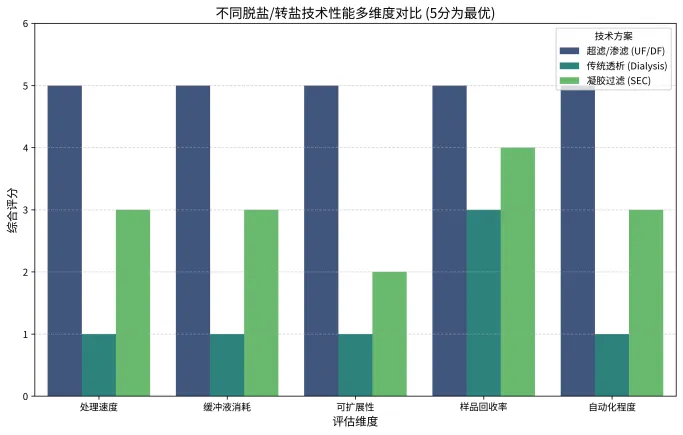
(Figure 2: Multi‑dimensional performance comparison of different desalting / salt‑switching technologies; 5 points represents optimal performance)
| Comparison Item | Ultrafiltration / Diafiltration (UF/DF) | Conventional Dialysis | Size‑Exclusion Chromatography (SEC) |
|---|
| Processing Speed | Fast; an industrial batch is normally completed within several hours | Slow; cycle lasts 12‑48 h | Moderate; constrained by sample loading capacity |
| Buffer Consumption | Low, generally 3‑10 diavolumes | Extremely high, 200‑500 volumes | Low‑to‑moderate |
| Scalability | Excellent; linearly scalable up to hundred‑liter‑scale manufacturing batches | Poor; difficult for large‑batch industrial production | Fair; processing upper limit is restricted by column volume |
| Sample Recovery Rate | High; >95% achievable upon process optimization; risks of membrane adsorption need to be managed | Low; significant non‑specific adsorption occurs on dialysis bags | Relatively high, yet feed solution undergoes substantial dilution |
| Automation Level | High; full‑process closed‑loop automated control is achievable | Barely any automation capability | Moderate |
Table 1 : Multi‑dimensional Performance Comparison of Different Desalting / Salt‑Switching Technologies
Key takeaway from an industrial perspective: Compared with the other two technologies, ultrafiltration‑diafiltration presents prominent advantages in processing efficiency, scale‑up feasibility and automation compatibility, making it better suited for commercial‑scale peptide drug production.
III. Process Design and Key‑Parameter Optimization for Ultrafiltration‑Based Peptide Salt‑Switching
Process‑parameter selection directly governs TFA removal efficiency, peptide recovery and molecular‑aggregation propensity. Membrane selection, diavolume and operating pressure/flow rate constitute the three core control points.
3.1 Membrane Cassette: Molecular Weight Cut‑Off (MWCO) and Membrane‑Material Selection
MWCO rule: Select a MWCO equivalent to 1/3‑1/6 of the target peptide molecular weight.
Example: For a 3 kDa peptide, a 1 kDa MWCO membrane is preferred.
Risk note: Excessively high MWCO will cause peptide molecules to pass through the membrane and result in yield loss. Unduly low MWCO leads to substantial flux decline and aggravated membrane fouling, reducing production throughput.
Major industrial membrane materials include regenerated cellulose (RC) and polyethersulfone (PES). Their characteristics are compared below.
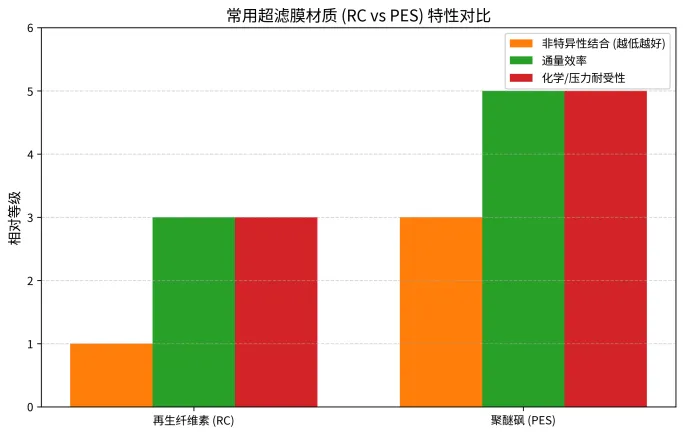
(Figure 3: Property comparison between common ultrafiltration membrane materials (RC vs PES))
Regenerated Cellulose (RC): Extremely low non‑specific adsorption; particularly suitable for hydrophobic peptides. Limited chemical tolerance; pH for cleaning and operation must be strictly controlled.
Polyethersulfone (PES): Outstanding chemical and pressure resistance, higher water flux. Certain charged and hydrophobic peptides may exhibit non‑specific adsorption; lab‑scale adsorption validation shall be performed in advance.
Practical suggestion: Conduct lab‑scale screening for new projects to finalize membrane material based on peptide hydrophobicity and charge properties. Empirical parameters shall not be directly adopted without verification.
3.2 Diavolume (DV) Calculation and Practical Requirements for TFA Removal
For fully permeable species such as salt ions, the displacement efficiency follows an exponential‑decay model.
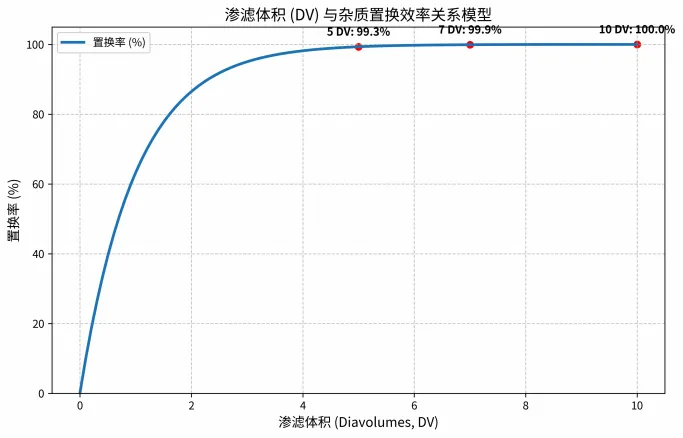
(Figure 4: Model relationship between diavolume (DV) and impurity‑displacement efficiency)
Critical industry note: TFA is not merely free salt ions. It forms strong electrostatic complexes with cationic peptides and does not strictly follow the ideal displacement curve. Theoretical diavolume values cannot be directly applied in actual production. Pharmacopoeias specify clear limits for TFA residual levels in peptide products. Industrially, 7‑10 DV diafiltration is generally implemented. TFA residuals must be sampled and tested to confirm compliance; diavolume alone cannot define the process endpoint.
3.3 Trans‑Membrane Pressure (TMP) and Tangential Flow Rate (TFF)
In tangential‑flow processes, feed solution flows parallel to the membrane surface. Shear force mitigates deposition of peptides and impurities on the membrane surface and maintains stable flux.
Practical principles: Operating flux must stay below the system critical flux to avoid irreversible membrane fouling. Tangential flow rates shall comply with ranges recommended by membrane‑cassette vendors. Insufficient flow rate exacerbates concentration polarization at the membrane surface; excessive flow rate generates excessive shear force and may induce aggregation of a small subset of peptides.
IV. Typical Process Case: Practical Details for Converting TFA‑Salt Peptides to Acetate Salt
Many researchers employ pure water for diafiltration to remove TFA. However, water‑rinsing alone cannot displace tightly bound TFA counter‑ions from peptide molecules, leading to excessive residuals. The complete two‑step process is described below:
Displacement stage: Prepare 0.1‑0.5 mol/L ammonium acetate / acetate buffer and perform continuous diafiltration of 5‑8 DV. High‑concentration acetate ions competitively bind to peptide sites to displace bound TFA, which is removed via the permeate stream.
Rinsing stage: Switch to purified water or target formulation buffer and continue diafiltration for 3‑5 DV to eliminate free ammonium acetate and excess acetate ions, yielding peptide feedstock of the target salt form.
Hint: Buffer pH shall avoid the peptide isoelectric point (pI) to mitigate risks of peptide precipitation.
V. Frequent Industrial‑Production Problems and Solutions
5.1 Membrane Adsorption and Membrane Fouling
Peptides contain both hydrophilic and hydrophobic moieties. Electrostatic and hydrophobic interactions drive peptide adsorption onto membrane surfaces, causing yield loss and flux decay.
Solutions:
Adjust feed‑solution pH to deviate from peptide pI; utilize molecular charge repulsion to reduce adsorption.
Add acetonitrile up to 20 % (process permitting) to weaken hydrophobic interactions. Impacts on peptide stability, subsequent formulation and solvent residuals must be evaluated.
Tween‑20 and other surfactants are not recommended in production processes: complete removal is difficult and residual excipient risks arise. Surfactants may only be used for membrane‑cassette pretreatment in lab‑scale explorations and shall be avoided in GMP‑compliant commercial manufacturing.
5.2 Peptide Aggregation and Precipitation during Diafiltration
Variations in pH and ionic strength during buffer exchange reduce peptide solubility and may trigger aggregation and precipitation, causing irreversible product loss.
Solutions:
Adopt continuous constant‑volume diafiltration and avoid discontinuous concentration‑dilution cycles to ensure gentle shifts in solution conditions.
Generate peptide‑solubility curves in lab‑scale development to define safe operating windows for pH and ionic strength.
Monitor feed‑solution turbidity. Promptly evaluate and adjust process parameters upon abnormal turbidity elevation.
VI. Summary
Ultrafiltration‑diafiltration delivers a mild, controllable and linearly scalable solution for desalting and salt‑switching of peptide drugs. During process development, rational selection of MWCO and membrane material, determination of diafiltration endpoints accounting for TFA‑binding characteristics, control of critical parameters including trans‑membrane pressure and tangential flow rate, plus proactive risk assessment for membrane adsorption and peptide aggregation, effectively safeguard final peptide‑product quality and process yield. With advancing membrane‑material technologies, ultrafiltration / tangential‑flow filtration will continue to play a core role in the manufacturing of peptides and oligopeptide biopharmaceuticals.
References
Phillips, A. T., & Signs, M. W. (2004). Desalting, concentration, and buffer exchange by dialysis and ultrafiltration. Current Protocols in Protein Science.
Roux, S., et al. (2008). Elimination and exchange of trifluoroacetate counter‑ion from cationic peptides. Journal of Peptide Science.
Schwartz, L. (2003). Diafiltration for desalting or buffer exchange. Bioprocess International.
Sartorius, “Laboratory Ultrafiltration Selection Guide”.
Repligen, “Tangential Flow Filtration Guide”.
 English
  CN
CN