English
  CN
CN

The recombinant collagen market is booming rapidly. Whether for medical dressings, functional skincare products or Class III medical devices, downstream purification is inevitably plagued by three core pain points: high viscosity, high impurity content and high purification costs. To solve this universal industry-wide challenge, the Hedera series chromatography media developed by Handtech adopt highly cross-linked agarose matrices and are specially designed for rapid capture and fine polishing of recombinant proteins. The media have completed process verification in multiple expression systems such as yeast and Escherichia coli. This paper provides references for downstream purification process development of recombinant collagen through real industrial cases and performance data.
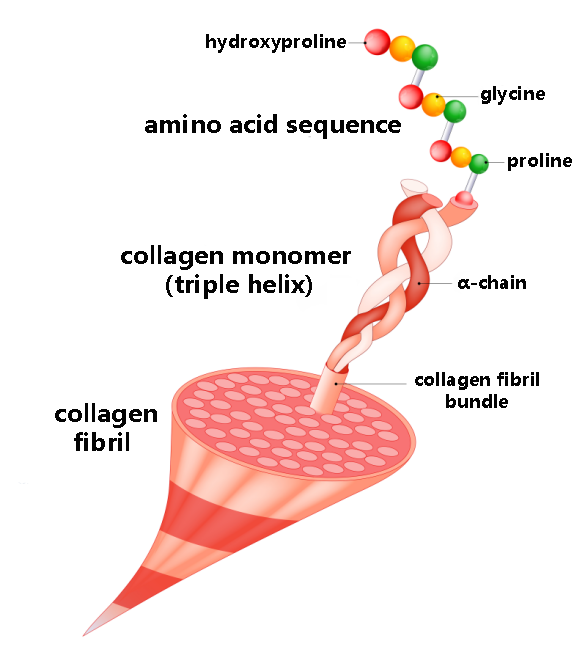
Figure 1 Schematic Diagram of Collagen Structure
Higher biosafety, free from risks of immunogenicity, inflammatory reaction and carcinogenicity;
Capable of large-scale production with stable batch-to-batch consistency;
Clear action mechanisms: it interacts efficiently with cells to regulate the secretion and deposition of extracellular matrix (ECM), thus facilitating structural repair and filling of damaged tissues.
Thanks to these merits, its application scope has expanded from medical aesthetics to regenerative medicine fields including gynecology, cardiovascular therapy, oncology and dermatology.
Fueled by the rapid advancement of synthetic biology, recombinant collagen stands out for high biocompatibility, non-immunogenicity and customizable sequences, evolving from simple raw material substitution to functional leading biomaterials. Market forecasts predict that China’s retail market scale of recombinant collagen will reach 114.5 billion RMB by 2027, occupying 59% of the total collagen market. Medical aesthetic injections, functional skincare and medical dressings constitute the three core growth drivers, among which the medical aesthetic injection segment alone is expected to hit 16.8 billion RMB.
Yeast expression system: Supports soluble protein expression, producing products with native-like conformations
E. coli expression system: Low production cost, yet target proteins often form inclusion bodies that require denaturation and refolding procedures.
Fermentation broths feature complex compositions, containing abundant host cell proteins (HCPs), host DNA, endotoxins and residual culture medium components. These impurities share highly similar physicochemical properties with target collagen, bringing multiple obstacles to separation and purification:
Difficult endotoxin removal: Negatively charged endotoxins easily bind to positively charged collagen, while injectable medical-grade products impose extremely strict limits on residual endotoxin levels;
High sample viscosity: Collagen boasts a large molecular weight and fibrous morphology; its viscosity surges sharply under low-temperature conditions, leading to limited flow velocity, increased backpressure and even column clogging of conventional chromatography media;
Complex impurity profiles: HCPs, nucleic acids and degraded collagen fragments overlap with target proteins in charge and hydrophobicity, making single-step purification unable to meet pharmaceutical-grade purity standards;
High cost pressure during process scale-up: Insufficient dynamic binding capacity of media leads to larger column volumes and higher buffer consumption, greatly increasing overall production costs.
| Media Category | Product Models |
|---|---|
| Affinity Chromatography | Hedera Ni NTA FF / Hedera Ni IDA FF / Hedera Ni TED FF |
| Hydrophobic Interaction Chromatography (HIC) | Hedera Phenyl FF, Hedera Octyl FF, Hedera Butyl FF, Hedera PM Phenyl |
| Ion Exchange Chromatography (IEX) | Hedera Q FF, Hedera HF Q, Hedera HF S, Hedera SP FF, Hedera PM SP |
| Mixed-Mode Chromatography | Hedera MMC FF, Hedera HF MMC |
| Size Exclusion Chromatography (SEC) | Hedera G75 / G25, Hedex 75 |
Media Combination: Hedera Q FF + Hedera Phenyl HPSample: Clarified supernatant of yeast-expressed recombinant collagenResult: Single electrophoresis band obtained, meeting injectable-grade standards
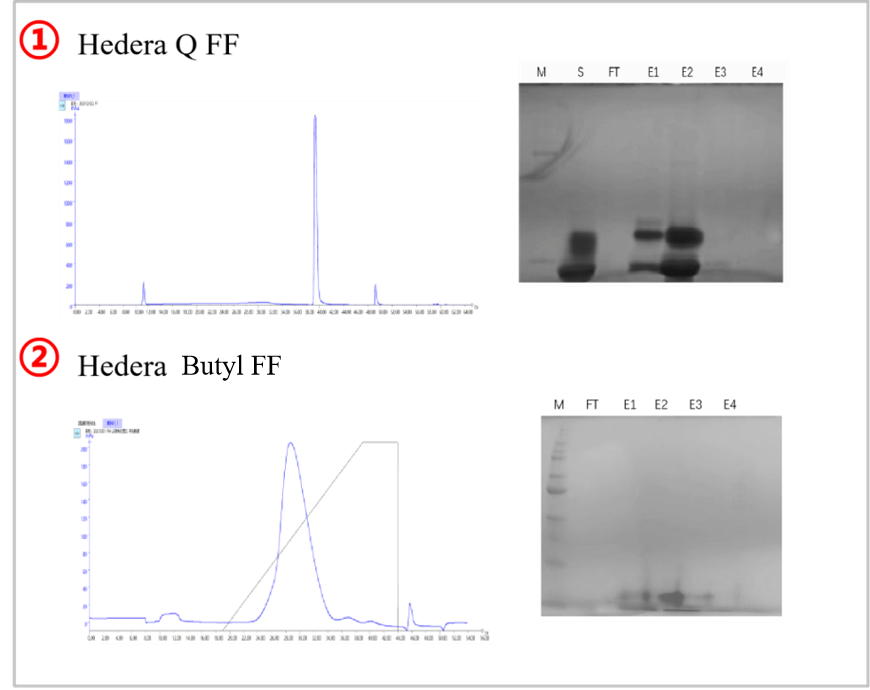
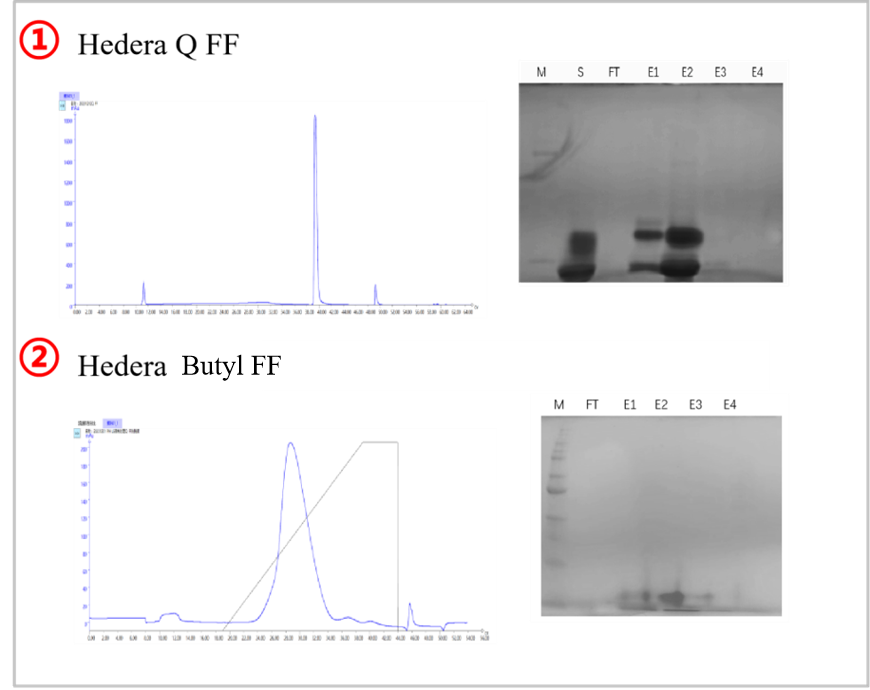
Media Combination: Hedera Q FF + Hedera Butyl 4FFSample: Feedstock of recombinant collagen expressed in E. coliResult: Target protein purity exceeds 95%, suitable for feedstock with complex impurity profiles
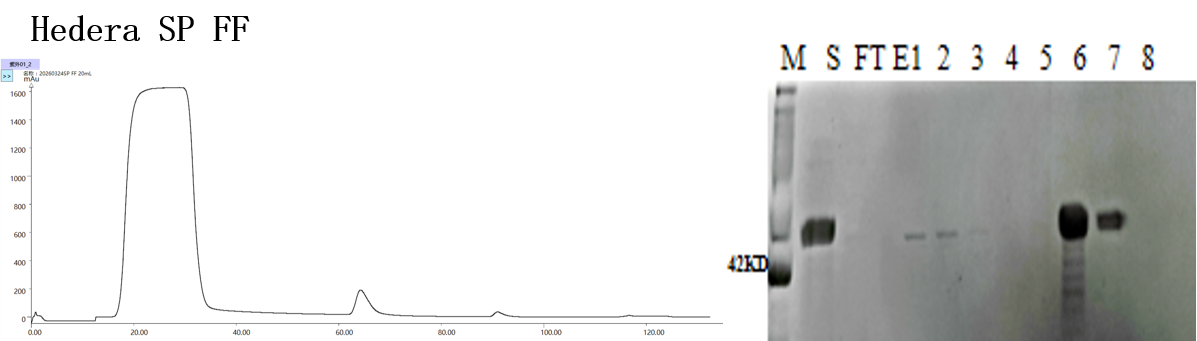
Media: Hedera SP FFSample: Yeast-expressed recombinant collagen feedstockResult: Efficient deep removal of various residual impurities in a single step, delivering a concise and high-efficiency process
Media: Hedera CM FFSample: Yeast-expressed recombinant collagen feedstockResult: Target protein purity higher than 95% after single-step purification
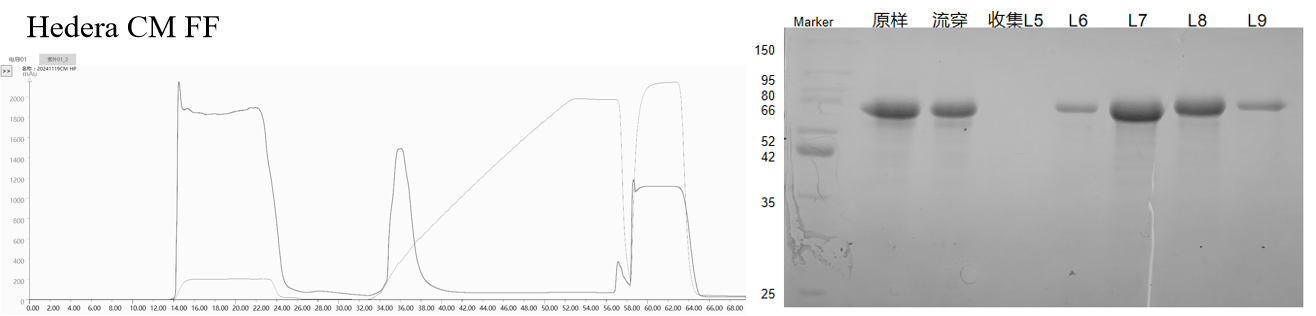
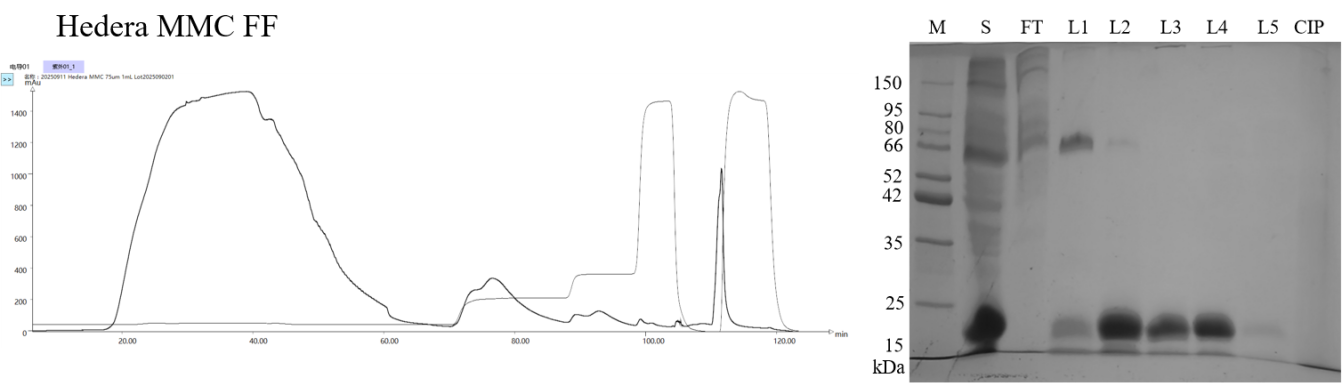
Handtech’s Hedera series ion exchange media have been validated for multiple purification workflows tailored to different expression systems and process requirements. Actual test data prove that single-step or two-step chromatography combinations can achieve collagen purity above 95%. Under harsh working conditions including high sample viscosity and complex impurity backgrounds, Hedera series media feature high flow velocity, low non-specific adsorption and high dynamic binding capacity, providing scalable media selection solutions for recombinant collagen purification.
Test Conditions: 350 consecutive loading cyclesTest Result: The medium retains high binding capacity and excellent separation performance with negligible performance attenuation after repeated use.
Built on highly cross-linked 6% agarose matrix functionalized with sulfopropyl strong cation exchange ligands. It supports a maximum linear flow velocity of 300 cm/h and maintains stable operation under low-temperature, high-viscosity sample conditions. Its low non-specific adsorption design minimizes impurity retention and allows thorough regeneration, making it ideal for rapid capture and crude purification of recombinant collagen.
Constructed on highly cross-linked agarose matrix modified with carboxymethyl weak cation exchange ligands. It realizes mild elution conditions and fits the purification of pH-sensitive target proteins.
Based on highly cross-linked agarose matrix bonded with quaternary ammonium strong anion exchange groups, it efficiently removes host DNA, endotoxins and acidic host proteins.
Highly cross-linked agarose matrix coupled with low-density phenyl ligands, designed for fine polishing of proteins and complementary to ion exchange chromatography workflows.
| Media Name | Catalog No. |
|---|---|
| Hedera SP FF | AG20001 |
| Hedera Q FF | AG20003 |
| Hedera CM FF | AG20002 |
| Hedera DEAE FF | AG20004 |
| Hedera MMC FF | AG50001 |
| Hedera Phenyl FF | AG30001 |
Please contact us to apply for medium trial samples or obtain detailed process parameters.