English
  CN
CN

In recent years, small nucleic acid drugs have been widely recognized as the "third wave" driving the global pharmaceutical industry, following small-molecule drugs and antibody therapeutics. With strengths including a broad range of targets, precise design and long-lasting efficacy, they show tremendous therapeutic potential across rare diseases, chronic conditions, infectious diseases and oncology. The number of globally approved pipelines and domestic R&D projects continues to grow at an accelerated pace, and the industry is rapidly advancing from a phase of intensive R&D to the critical stage of large-scale commercial production.
While the industry largely focuses on pipeline advancement and BD transactions, the supporting value of upstream production is becoming increasingly prominent. Small nucleic acid drug production involves long workflows with stringent precision requirements, and production scale-up along with quality control are widely acknowledged as core industry barriers. From solid-phase synthesis to separation and purification, and further to ultrafiltration and concentration, piecing together equipment from disparate manufacturers can no longer accommodate the full-cycle needs of drug development from early-stage research to commercial mass production.
As a leading enterprise in China's separation and purification sector, Hanbon Sci. & Tech. delivers a targeted industry solution. Driven by the dual core strategy of self-developed equipment and supporting processes, the company covers the entire workflow of nucleic acid solid-phase synthesis, chromatographic separation and purification, and ultrafiltration concentration. It has established a complete pathway from laboratory R&D, pilot scale-up to commercial mass production, delivering implementable, integrated production solutions for partners.
I. From Small Nucleic Acid Drugs to the Full Production Chain
If a human cell were a factory, DNA would be the master blueprint storing genetic information, mRNA would be the "work order" transmitting operational instructions, and small nucleic acid drugs would be specialized tools to regulate these work orders. Some block the synthesis of pathogenic proteins, while others restore missing gene functions, enabling disease intervention at the genetic level with the potential to address both symptoms and root causes.
Currently, mainstream small nucleic acid therapeutics include antisense oligonucleotides (ASO), small interfering RNA (siRNA) and other categories. Leveraging their advantages of diverse targets, precise design and durable efficacy, they demonstrate vast application prospects in chronic disease areas such as hypertension, hyperlipidemia and hepatitis B. The production of qualified small nucleic acid active pharmaceutical ingredients (APIs) relies on interconnected processes, with three core stages:
1. Solid-phase synthesis
Using phosphoramidite monomers as raw materials, oligonucleotide chains with specific sequences are synthesized through cyclic reactions of deprotection, coupling, oxidation and capping. As the starting point of production, reaction precision directly determines crude product purity and final yield.

Figure 1: Principle of Oligonucleotide Synthesis
2. Separation and purification
The synthesized crude product contains abundant truncated fragments and reaction impurities, which must be removed via reverse-phase chromatography or ion exchange chromatography to meet API-grade purity standards. This is the core step for quality control.
3. Ultrafiltration and concentration
This stage completes buffer exchange and product concentration, further removes small-molecule impurities, and adjusts the product to the concentration and matrix required for formulation. It is a critical final process prior to finished product filling.
The coordination across the entire workflow directly determines ultimate production efficiency, product quality and overall costs. This is precisely why the single-equipment procurement model is increasingly mismatched with the demands of the industrialization phase.
II. Common Pain Points in Small Nucleic Acid Production Amid Industrial Acceleration
As a growing number of pipelines advance to clinical stages and move toward commercialization, pain points on the production side are continuously amplified, presenting shared challenges for numerous pharmaceutical companies and CDMO enterprises:
1. "Patchwork" equipment procurement leading to process connectivity gaps
Equipment for each segment of small nucleic acid production often comes from different manufacturers, with inconsistent control logic and mismatched parameter standards. Connecting upstream and downstream processes requires repeated debugging, which not only significantly extends project timelines, but also frequently leads to the issue of "qualified results in the preceding process but plummeting yield in the next". When problems arise, responsibility boundaries are blurred and troubleshooting is difficult.
2. Hardware-only sales without process support, turning scale-up into a "valley of death"
Production scale-up and quality control are universally recognized as core thresholds in small nucleic acid manufacturing. Most equipment vendors only deliver hardware without providing mature scale-up processes. Parameters that perform reliably in lab-scale trials often result in reduced purity and uncontrolled impurities when transferred to pilot-scale and industrial-grade equipment. Pharmaceutical companies are forced to spend extensive time and costly monomer raw materials on repeated trial and error, putting them at high risk of missing market windows.
3. Rising compliance requirements and high risks of multi-supplier models
As pipelines enter late clinical and commercial phases, project requirements for GMP compliance, audit trails and stable delivery increase substantially. Coordinating with multiple suppliers means managing multiple sets of compliance systems and undergoing repeated customer audits, driving up operation and maintenance costs. When issues occur, troubleshooting efficiency is low, and it is difficult to safeguard overall project progress.
III. Dual-Engine Drive: Hanbon Sci. & Tech. Delivers Full-Chain Integrated Solutions
Hanbon Sci.&Tech.'s core differentiation is that it does not position itself as a single equipment supplier. Guided by the philosophy of "equipment as the framework, process as the soul", it simultaneously delivers self-developed full-process equipment and supporting mature processes, enabling truly integrated solution delivery.
Hanbon Sci.&Tech. boasts a complete matrix of self-developed equipment spanning laboratory to industrial scales, covering the three core links of synthesis, purification and ultrafiltration. All equipment adopts unified control logic and native compatibility, resolving the industry pain point of "equipment patchwork" at the hardware root.
(1) Nucleic Acid Synthesis Platform: Full-Scale Coverage with Seamless Scale-Up
For different R&D and production stages, the company provides complete nucleic acid synthesis equipment and supporting consumables, achieving full-scale coverage from micromolar to molar levels:
-Laboratory scale: Oligo-Lab 25 (50μmol~500μmol), Oligo-Lab 100 (200μmol~9mmol), Oligo-Lab 150 (500μmol~12mmol). Featuring modular design paired with intelligent software, their operation logic aligns with industry usage habits and is optimized for early process development.

Figure 2: Laboratory-Scale Nucleic Acid Synthesizer
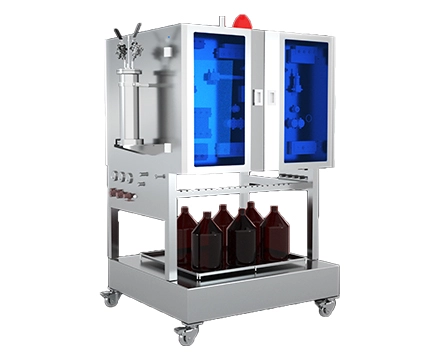
-Pilot scale: Bio-Oligo 36L (4mmol~48mmol) delivers stable hectogram-scale oligonucleotide raw material output per batch; Bio-Oligo 180L (20mmol~150mmol) achieves stable near-kilogram-scale raw material output per batch. The entire series adopts professional explosion-proof design, meets GMP production requirements, and lays a solid compliance foundation for clinical-grade raw material manufacturing.

Figure 3: Pilot-Scale Nucleic Acid Synthesizer
-Production scale: Bio-Oligo 480L (50~400mmol), Bio-Oligo 1800L (100~900mmol), Bio-Oligo 3000L (300~1800mmol), fully satisfying commercial mass production demands. The entire series features explosion-proof design adapted to GMP workshop production scenarios, and its software system complies with FDA 21 CFR Part 11 regulations.

Figure 4: Production-Scale Nucleic Acid Synthesizer
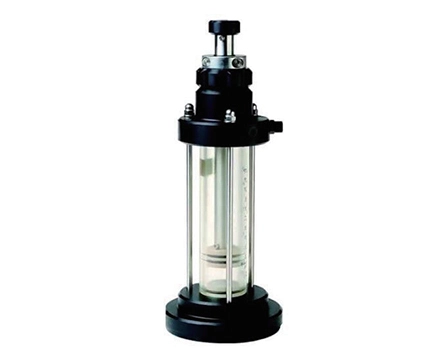
-Supporting synthesis columns: Self-developed synthesis columns available in all specifications, from 6.3mL fixed-volume columns to production-grade columns with 800mm inner diameter. Constructed from stainless steel and resistant to organic reagents, their optimized flow channel design ensures uniform solution distribution, adapting to synthesis requirements at all stages.

Figure 5: Synthesis Columns of Various Specifications
(2) Separation and Purification Platform: Dual Technical Routes with Native Compatibility Between Chromatography Systems and Media
Building on over 20 years of chromatography technology expertise, Hanbon Sci. & Tech. provides two mainstream purification routes: reverse-phase chromatography and ion exchange chromatography. Paired with self-developed chromatography media, the platform eliminates trial-and-error costs caused by "equipment-media incompatibility" from the source.
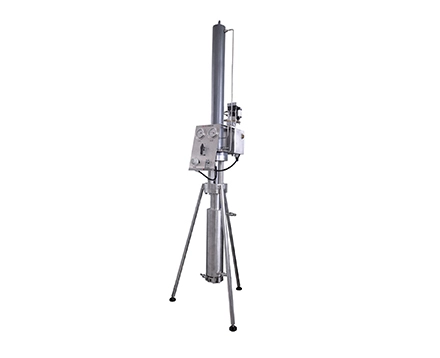
- Reverse-phase chromatography route: Ranging from laboratory-scale high-performance liquid chromatography (HPLC) systems to CS-Prep series industrial preparative HPLC systems, paired with Dynamic Axial Compression (DAC) columns. The solutions feature high throughput and high automation, with equipment design compliant with GMP/cGMP and FDA 21 CFR Part 11 regulations, and complete validation documentation available.
- Ion exchange chromatography route: Bio-Lab series laboratory chromatography systems (covering microgram to gram-scale purification) are suited for early process development; Bio-Pro series fully automatic pilot/production-scale chromatography systems feature an integrated design conforming to ASME BPE and GMP standards, enabling full-process automation of equilibration, sample loading, elution and collection.
- Empowered by self-developed media: Its wholly-owned subsidiary Hedera Sci. & Tech. independently develops separation materials including silica gel media and agarose media. These media are developed and optimized in sync with purification systems, guaranteeing separation efficiency and product yield from the source.
(3) Ultrafiltration and Concentration Platform: Low-Shear Design Preserving Molecular Integrity
Addressing the susceptibility of small nucleic acid molecules to degradation, the full series of ultrafiltration systems adopt optimized flow channel design to reduce shear force, fully safeguarding molecular integrity and product recovery.
-Laboratory scale: Bio-Lab TFF automatic tangential flow filtration system with fully automatic transmembrane pressure control. It enables automatic concentration, constant volume diafiltration, automatic collection and data recording, offering convenient operation adapted to R&D stage needs.
-Industrial scale: Bio-TFF series automatic tangential flow filtration system adopts a split circulation tank design, achieving a low minimum operating volume, high concentration factor and excellent product recovery. It supports clean-in-place (CIP) cleaning and fully meets pilot and industrial production requirements.
Equipment serves as the hardware foundation, while process is the core competitive advantage. Hanbon Sci. & Tech.'s key edge over other equipment vendors lies in its delivery of not just hardware, but mature, directly deployable processes that help customers bring equipment online quickly and achieve stable, qualified production outcomes.
(1) Synthesis Process Optimization: Enhancing Crude Product Quality at the Source
For nucleic acid molecules with different sequences and modification types, Hanbon Sci. & Tech. provides validated solid-phase synthesis process parameters, precisely controls reaction conditions for each step, improves monomer coupling efficiency and reduces impurity formation.
Taking the synthesis of inclisiran, a classic siRNA drug, as an example: Using the Oligo Lab 100 laboratory-scale nucleic acid synthesizer with process optimization, the crude purity of the sense strand reaches 86.2%, and that of the antisense strand reaches 84.4%. The average monomer coupling efficiency can reach 99%, and the molecular weight detected by mass spectrometry fully matches the theoretical value. This high-purity crude product establishes a premium foundation for subsequent purification steps.
During synthesis, the equipment monitors the deprotection process in real time via a UV detector, and tracks the status of coupling and oxidation reactions through conductivity measurements, realizing full-process controllability and ensuring batch-to-batch consistency.
(2) Purification Process Development: Matching Optimal Separation Solutions
Based on molecular characteristics and quality standards, customized reverse-phase or ion exchange purification processes are developed for customers, covering media selection, elution condition optimization and impurity removal strategies. Balancing product purity and yield, these solutions drastically shorten customers' in-house process development cycles.
(3) Scale-Up Process Validation: Smoothly Crossing the "Valley of Death"
All equipment series adopt consistent design logic and control systems, enabling linear transfer of process parameters. Hanbon Sci. & Tech. provides comprehensive scale-up validation data and technical support, helping customers smoothly transfer laboratory processes to pilot and industrial-scale production, significantly reducing scale-up failure risks and saving costly raw material trial-and-error expenses.
The synchronous R&D and native compatibility of equipment and processes go far beyond a simple "bundled sale of multiple devices". Instead, they deliver a complete production solution that "operates immediately upon installation and delivers qualified results upon commissioning". Customers only need a single point of contact with Hanbon to address full-process production needs from synthesis to ultrafiltration, truly unlocking the end-to-end path from laboratory to commercialization.
IV. Conclusion
At present, China's small nucleic acid industry is at a critical juncture transitioning from "R&D catch-up" to "industrial implementation". Stable, efficient and scalable production capacity is the core competitiveness for enterprises to navigate industry cycles.
Hanbon Sci.&Tech. will continue to drive growth through the dual engines of equipment and process, deepen its technological expertise across the full small nucleic acid production chain, support partners in accelerating product R&D and commercialization, and jointly advance the high-quality development of China's small nucleic acid industry.
Figure 6: Full Product Portfolio